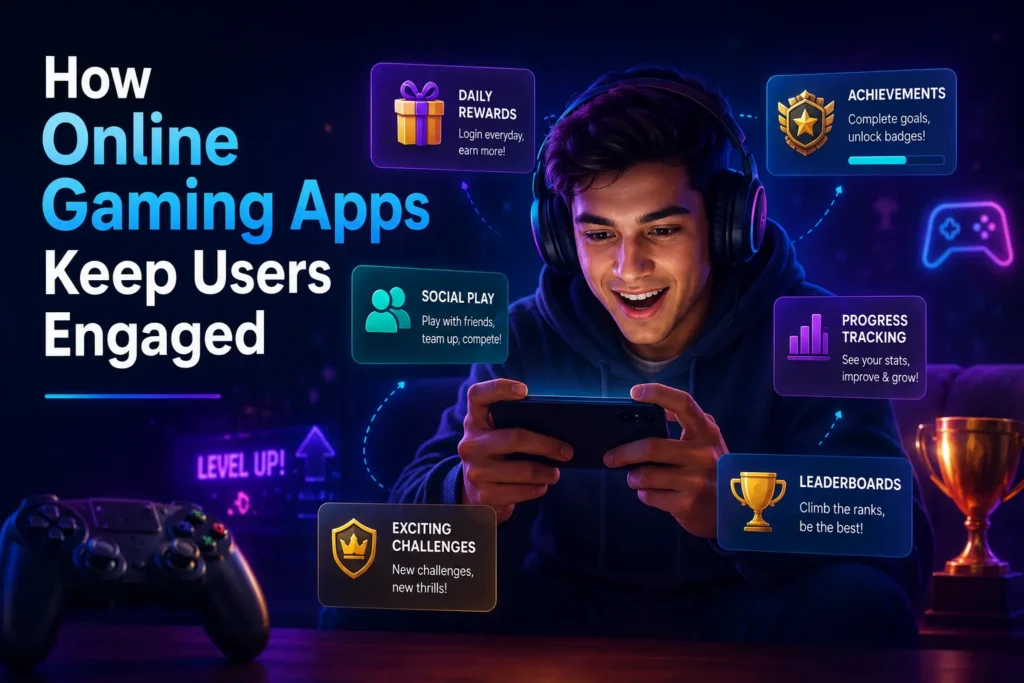
Online gaming apps are no longer just simple entertainment platforms. Today, they are carefully designed to keep users active for longer periods through rewards, personalized experiences, social interaction, and behavioral psychology.
From mobile games and fantasy sports apps to casino-style platforms and multiplayer games, user engagement has become one of the biggest priorities in the gaming industry.
But how exactly do gaming apps keep people coming back every day?
The answer lies in a combination of technology, psychology, and smart user experience design.
Key Takeaways
- Gaming apps use rewards and progression systems to increase engagement
- Personalized recommendations help keep users active
- Social features create emotional attachment
- Push notifications encourage repeat visits
- AI and behavioral tracking improve user retention
- Gamification and fast gameplay increase user activity
- Healthy gaming habits remain important for long-term balance
Why User Engagement Matters in Gaming Apps
For gaming companies, user engagement directly affects:
- Daily active users
- In-app purchases
- Subscription revenue
- Advertising income
- Player retention
The longer users stay active, the more profitable the platform becomes.
That is why modern gaming apps invest heavily in features that encourage repeat usage and emotional attachment.
Reward Systems Keep Players Returning
One of the most common engagement strategies is reward-based progression.
Gaming apps often provide:
- Daily login bonuses
- Achievement rewards
- Free spins or coins
- Unlockable content
- Streak rewards
These systems create anticipation and encourage users to return regularly.
Many players continue opening apps daily simply to avoid losing progress or rewards they have already earned.
Personalized Recommendations Increase Activity
Modern gaming apps use algorithms to understand player behavior.
Based on user activity, apps may recommend:
- Similar games
- Personalized challenges
- Targeted promotions
- Special events
- Suggested opponents
This personalized experience makes the platform feel more relevant to each individual user.
When users see content matching their interests, they are more likely to remain engaged.
Social Features Create Emotional Connection
Gaming is no longer a solo experience.
Many apps now include:
- Live chat
- Multiplayer modes
- Friends lists
- Team competitions
- Community leaderboards
Social interaction keeps users emotionally invested because people naturally enjoy competition, recognition, and shared experiences.
Players are more likely to continue using apps where friends or online communities are active.
Push Notifications Bring Users Back
Push notifications are one of the most powerful engagement tools used by gaming apps.
These notifications often include:
- Reward reminders
- Event announcements
- Limited-time offers
- Match invitations
- Achievement updates
Well-timed notifications create curiosity and encourage users to reopen the app.
However, excessive notifications can sometimes have the opposite effect and frustrate users.
Limited-Time Events Increase Urgency
Many gaming platforms use temporary events to create excitement.
Examples include:
- Seasonal tournaments
- Holiday rewards
- Limited-edition items
- Time-sensitive missions
This strategy creates a fear of missing out, often called FOMO.
When users believe rewards are only available for a short period, they are more likely to participate immediately.
Gamification Makes Apps More Addictive
Gamification refers to adding game-like elements to increase user engagement.
This includes:
- Levels and rankings
- Progress bars
- Achievement badges
- Daily challenges
- Experience points
These features give users a sense of accomplishment and progression.
Even simple rewards can trigger satisfaction and motivate continued play.
Fast Gameplay Keeps Attention High
Modern users have shorter attention spans than ever before.
Gaming apps often use:
- Quick matches
- Instant rewards
- Rapid animations
- Short gameplay loops
This fast-paced design helps prevent boredom and keeps users constantly stimulated.
The quicker the reward cycle, the stronger the engagement can become.
AI and Data Tracking Improve Retention
Many gaming companies now use artificial intelligence and behavioral analytics to understand user habits.
Apps may track:
- Playing time
- Favorite game modes
- Spending patterns
- User inactivity
- Session frequency
This data helps platforms adjust the experience for each user and improve retention rates.
Some systems can even predict when a player is likely to stop using the app and trigger special offers to keep them engaged.
In-App Purchases Encourage Continued Play
Many free-to-play gaming apps generate revenue through optional purchases.
These may include:
- Virtual currency
- Cosmetic upgrades
- Battle passes
- Premium memberships
Some users spend money to progress faster or gain exclusive content.
The combination of rewards and progression systems often increases user spending over time.
The Psychology Behind Gaming Engagement
Gaming apps often rely on psychological principles to increase retention.
These include:
- Dopamine-driven rewards
- Competition
- Achievement motivation
- Curiosity
- Fear of missing out
Unpredictable rewards, such as loot boxes or surprise bonuses, can create excitement because users never know exactly what they will receive next.
This unpredictability keeps many players engaged for longer periods.
Are Gaming Apps Designed to Be Addictive?
Some experts believe certain gaming systems can encourage addictive behavior, especially when apps rely heavily on:
- Constant rewards
- Endless progression
- Emotional triggers
- Frequent notifications
Responsible gaming advocates often recommend:
- Screen time limits
- Spending controls
- Regular breaks
- Digital wellness tools
Healthy gaming habits are important, especially for younger users.
How Users Can Maintain Healthy Gaming Habits
Staying engaged with games is normal, but balance is important.
Helpful habits include:
- Setting time limits
- Avoiding impulsive spending
- Taking regular breaks
- Turning off unnecessary notifications
- Monitoring screen time
Gaming should remain enjoyable entertainment rather than a daily compulsion.
Frequently Asked Questions (FAQs)
Gaming apps use rewards, competition, progression systems, and social interaction to keep users interested and active.
Yes. Many apps use behavioral psychology, reward systems, and emotional triggers to improve user retention.
Gamification involves adding features like levels, achievements, and rewards to encourage continued participation.
Yes. Notifications help remind users about rewards, events, and updates, encouraging them to reopen the app.
Some gaming systems may encourage excessive use, especially when users lose track of time or spending habits.